Why We Lose Collagen in Our Skin - And How Peptides Can Help!
Ever looked in the mirror and thought, Where did my glow go? As we age, our skin loses its firmness, bounce and smooth texture — all thanks to declining collagen. But the good news is, peptides can help bring it back.
What Is Collagen and Why Do We Lose It?
Collagen is the most abundant protein in our skin, responsible for keeping it firm, plump and wrinkle-free. Think of it as the scaffolding holding your skin up. After the age of 25, collagen production drops by about 1% per year. By your 40s and 50s, your skin is producing significantly less.
Key collagen killers: UV rays, pollution and free radicals, poor diet, stress and lack of sleep — and of course, time itself. This is why daily SPF is non-negotiable for preserving your skin's collagen bank.
How Peptides Help Restore Collagen
Peptides are short chains of amino acids — the building blocks of proteins like collagen. When applied to the skin, they signal your skin to produce more collagen. Think of them as messages telling your skin it needs reinforcements.
Benefits of Peptides in Skincare
- Boosts collagen production — firms and plumps over time
- Reduces fine lines and wrinkles
- Improves and strengthens the skin barrier
- Hydrates and smooths — many peptide formulas also lock in moisture
- Soothes and repairs — some peptides have anti-inflammatory properties
How to Use Peptides
Pair peptides alongside Hyaluronic Acid, Vitamin C and Bakuchiol for best results. Be patient — peptides work over time with consistent use, typically showing visible results over several weeks to months.
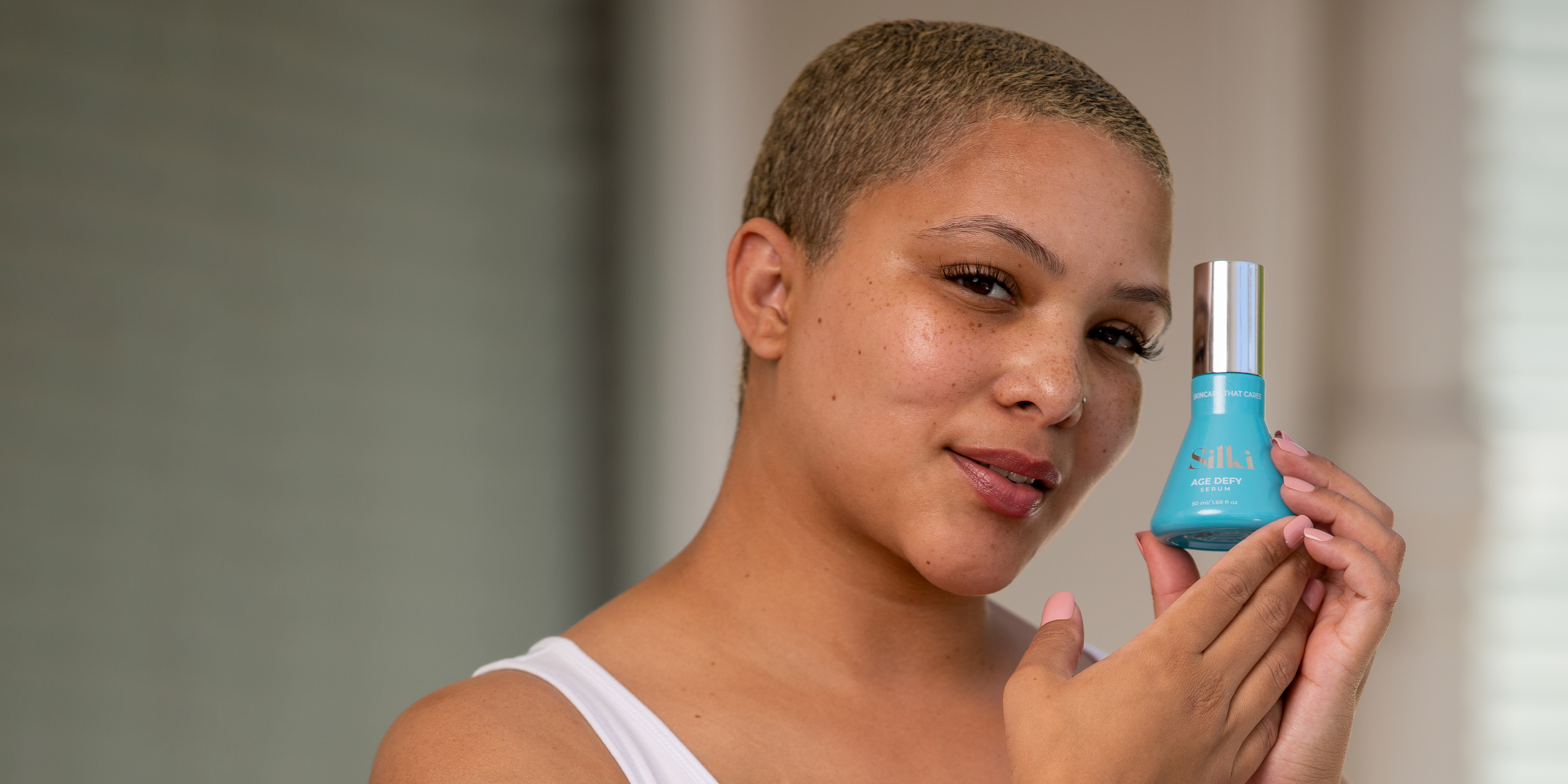
Find peptides in Silki's Age Defy Serum, which combines a powerful peptide complex with Hyaluronic Acid for comprehensive anti-ageing and hydration.
Also read: Retinyl Palmitate: A Gentle Yet Effective Vitamin A Derivative