
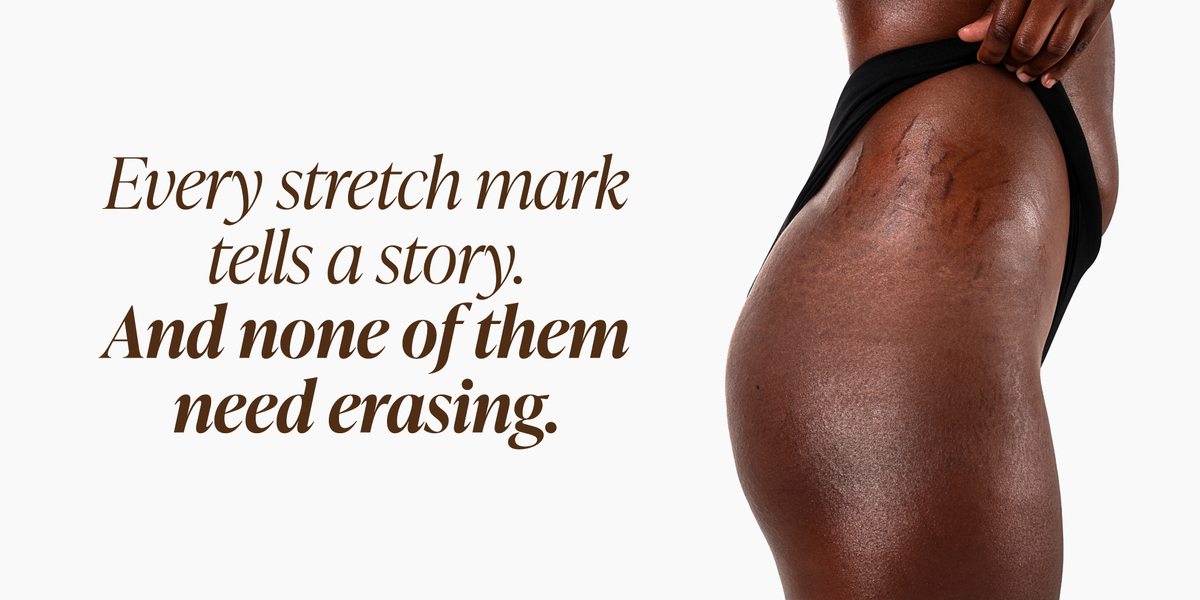
Stretch Marks, Explained: What They Are, Why They Happen & How to Care for Your Skin
Stretch marks are incredibly common, yet there's still plenty of confusion around what causes them, whether they can fade and what skincare can actually do to improve their appearance.
Whether they're new, old, pink, purple, silver or somewhere in between, stretch marks are a natural part of how skin changes over time. Understanding why they develop is the first step towards choosing the right skincare to support your skin.
What Are Stretch Marks?
Stretch marks, also known as striae, are a form of scarring that develops when the skin stretches or changes rapidly. This can affect the skin's collagen and elastin fibres, which are responsible for helping skin maintain its structure, strength and elasticity.
When these fibres are stretched beyond their capacity, small changes occur within the deeper layers of the skin, resulting in visible lines or streaks on its surface.
Stretch marks commonly appear on the:
-
Stomach and abdomen
-
Thighs and hips
-
Buttocks
-
Breasts
-
Upper arms
They're completely normal and can develop on different skin types, body shapes and at various stages of life.
What Causes Stretch Marks?
Stretch marks can develop for several reasons, and they're not always associated with weight changes.
Some of the most common causes include:
-
Growth and Development: During puberty, the body can grow quickly, causing the skin to stretch as different areas develop. This is one of the most common reasons stretch marks appear.
-
Pregnancy: As the abdomen expands to accommodate a growing baby, the skin stretches. Hormonal changes during pregnancy may also influence the skin's elasticity, making stretch marks more likely to develop.
-
Weight Fluctuations: Periods of rapid weight gain or loss can cause changes in the skin's structure, particularly when the body changes faster than the skin can adapt.
-
Muscle Growth: Building muscle, particularly through strength training, can increase the size of certain areas of the body. When this happens quickly, stretch marks may develop.
- Hormonal Changes and Genetics: Hormones can influence the skin's structure and elasticity. Genetics also play a role, meaning some people are naturally more prone to developing stretch marks than others.
New vs Old Stretch Marks: What's the Difference?
Not all stretch marks look the same. Their colour, texture and appearance can change over time, which is why understanding their different stages is important.
New Stretch Marks
Newer stretch marks, often called striae rubrae, can appear pink, red, purple or darker than the surrounding skin, depending on your skin tone.
They may initially feel slightly raised or textured. This is the earlier stage of stretch mark development, when the marks are still changing in appearance.
Older Stretch Marks
Over time, stretch marks generally become lighter or less noticeable. Often referred to as striae albae, older stretch marks may appear white, silver or lighter than the surrounding skin.
They can also develop a slightly indented or uneven texture.
While stretch marks may naturally become less noticeable over time, they don't always disappear completely. Their appearance can be influenced by genetics, skin type and how the skin changes over time.
Can You Improve the Appearance of Stretch Marks?
Although stretch marks are a form of scarring, certain skincare ingredients can help improve the appearance and texture of stretch-marked skin.
The key is to look beyond basic moisturisation and consider ingredients that support skin hydration, smoothness, firmness and elasticity.
Here are some ingredients worth knowing about:
Plant PDRN
Plant PDRN is an ingredient technology inspired by polydeoxyribonucleotide (PDRN), traditionally associated with DNA-derived skincare ingredients. Plant-derived alternatives are used in cosmetic formulations designed to support the appearance and condition of the skin.
Plant Exosomes
Exosomes are microscopic structures involved in cell-to-cell communication. Plant-derived exosomes are increasingly explored in skincare formulations as part of ingredient technologies designed to support the appearance and overall condition of the skin.
Peptides
Peptides are short chains of amino acids used in skincare formulations to support the appearance of firmer, smoother-looking skin.
Centella Asiatica
Centella Asiatica is a botanical ingredient widely used in skincare. It is valued for its skin-conditioning properties and is often included in formulations designed to support smoother, healthier-looking skin.
Together, ingredients like these can form part of a targeted body-care routine focused on improving the appearance of stretch-marked skin.
Meet Your Targeted Stretch Mark Treatment
If you're looking to give stretch-marked skin a little extra attention, targeted body care can be a useful addition to your routine.
Silki's Phyto ExoPDRN™ Stretch Mark Serum is formulated specifically for skin concerned with new and old stretch marks.
Powered by two targeted actives, the formula works to improve the appearance of stretch marks while supporting smoother, softer and firmer-looking skin.
What's Inside?
-
2.5% Striover™: A targeted active included to help visibly improve the appearance of stretch marks.
-
2% Centella Reversa™: A Centella-derived Plant PDRN ingredient featured to support improvements in the appearance and texture of stretch-marked skin.
The formula also features Plant PDRN technology, Plant Exosomes and Peptides to support the appearance of skin firmness and elasticity.
The result? A targeted body serum designed to help refine uneven texture and improve the appearance of both new and old stretch marks.
Building a Body-Care Routine for Stretch Marks
Consistency is an important part of any skincare routine. While no topical product can guarantee that stretch marks will disappear, targeted skincare can help improve their visible appearance over time.
A few ways to care for stretch-marked skin:
-
Keep Skin Hydrated: Regular moisturisation helps maintain the skin's softness and suppleness. Well-hydrated skin can also appear smoother.
-
Introduce Targeted Ingredients: Consider incorporating a body serum formulated with ingredients that support the appearance of skin texture, firmness and elasticity.
-
Be Consistent: Skincare takes time. Follow the product's recommended directions for use and give your routine time to work.
- Set Realistic Expectations: Stretch marks are natural and may not disappear completely. The goal of targeted skincare is to support improvements in their appearance, not to erase every mark.
Your Skin, Every Stage of the Journey
Your skin changes as you do. Whether your stretch marks developed during puberty, pregnancy, muscle growth or simply over time, they're a natural part of your skin's story.
With the right ingredients and a consistent body-care routine, you can give your skin the support it needs.
Discover Silki's Phyto ExoPDRN™ Stretch Mark Serum and give stretch-marked skin targeted care.
LAUNCHING SOON